

Daily Devotional
Thursday, August 3, 2028 (NS), July 21, 2028 (OS)
No Fasting.
Thursday of the Ninth Week
The commemoration of our venerable Fathers Symeon of Emesa, the fool for Christ's sake, and John, his fellow ascetic, and the holy Prophet Ezekiel (commemorated on some Gk. calendars on the 23rd of July).
Scripture Readings
Paschalion — Movable Calendar
Thursday of the Ninth Week
Epistle
The Reading is from the First Epistle of Saint Paul to the Corinthians [§ 155].
14 6Brethren, if I should come to you speaking with tongues, what shall I profit you, unless I speak to you either in revelation, or in knowledge, or in prophecy, or in teaching? 7Likewise, when lifeless things give a sound, whether flute or harp, if a distinction is never given in the sounds, how shall it be known what is being piped or being harped? 8For also if a trumpet should give an uncertain sound, who shall prepare himself for war? 9Thus also, unless by the tongue ye should give an easily understood speech, how shall it be known what is being spoken? For ye shall speak into the air. 10There are, if it should happen, so many kinds of speech in the world, and none of them is without its distinctive sound. 11Therefore, if I do not know the force of the speech, I shall be a barbarian to the one who speaketh, and the one who speaketh shall be a barbarian to me. 12Even so ye, since ye are zealots of spiritual gifts, keep on seeking that ye may abound to the building up of the Church. 13Wherefore let the one who speaketh in a tongue pray that he may interpret. 14For if I should pray in a tongue, my spirit prayeth, but my understanding is unfruitful. 15What is it then? I will pray with the spirit, and I will pray also with the understanding. I will chant with the spirit, and I will chant also with the understanding. 16Else if thou bless with the spirit, how shall the one who filleth the place of the unlearned say the “Amen” at thy giving of thanks, since what thou sayest he knoweth not? 17For thou indeed givest thanks well, but the other is not being edified. 18I thank my God I speak with tongues more than all of you; 19but in the church I wish to speak five words with my understanding, in order that I might instruct others also, than myriads of words in a tongue.
Gospel
The Reading is from the Holy Gospel according to Saint Matthew [§ 81]. At that time:
20 17When Jesus went up to Jerusalem, He took the twelve disciples apart in the way and said to them, 18“Behold, we are going up to Jerusalem, and the Son of Man shall be delivered up to the chief priests and scribes; and they shall condemn Him to death, 19“and shall deliver Him up to the Gentiles to mock and to scourge and to crucify. And the third day He shall raise Himself.” 20Then the mother of the sons of Zebedee came to Him with her sons, making obeisance and asking something from Him. 21And He said to her, “What dost thou wish?” She saith to Him, “Command that these two sons of mine might sit, one on Thy right and one on Thy left, in Thy kingdom.” 22But Jesus answered and said, “Ye know not what ye ask for yourselves. Are ye able to drink the cup which I am about to drink, and to be baptized with the baptism with which I am baptized?” They say to Him, “We are able.” 23And He saith to them, “Ye shall indeed drink My cup, and be baptized with the baptism with which I am baptized; but to sit on My right and on My left is not Mine to give, but it shall be given to those for whom it hath been prepared by My Father.” 24And after the ten heard it, they were indignant on account of the two brothers. 25But Jesus called them to Himself and said, “Ye know that the rulers of the nations exercise lordship over them, and the great ones exercise authority over them. 26“But it shall not be so among you. But whosoever doth wish to become great among you shall be your servant; 27“and whosoever doth wish to be first among you shall be your slave— 28“even as the Son of Man came not to be served, but to serve, and to give His life a ransom for many.”
Menaion — Fixed Calendar
The commemoration of our venerable Fathers Symeon of Emesa, the fool for Christ's sake, and John, his fellow ascetic, and the holy Prophet Ezekiel (commemorated on some Gk. calendars on the 23rd of July).
Epistle
The Reading is from the First Epistle of Saint Paul to the Corinthians [§ 129]. Brethren:
3 18Let no one be deceiving himself. If anyone among you think himself to be wise in this age, let him become foolish, in order that he might become wise. 19For the wisdom of this world is foolishness with God. For it hath been written: “He taketh the wise in their own craftiness [cf. Job 5:13]”; 20and again, “The Lord knoweth the reasonings of the wise, that they are vain [cf. Ps. 93(94):11].” 21Therefore let no one boast in men. For all things are yours: 22whether Paul, or Apollos, or Kephas, or the world, or life, or death, or things present, or things coming—all are yours. 23And ye are Christ’s, and Christ is God’s.
Gospel
No reading given.
Lives of the Saints (Prologue)
August 3rd – Civil Calendar
July 21st – Church Calendar
1. The Holy Prophet Ezekiel.
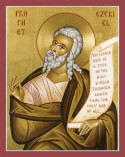 The son of a priest from the city of Sarir, he was taken into
captivity in Babylon with King Jehoiachin and many other Israelites. Living in captivity, Ezekiel
prophesied for twenty-seven years. He was a contemporary of the Prophet Jeremias. As Jeremias
taught and prophesied in Jerusalem, so Ezekiel taught and prophesied in Babylon. Jeremias’
prophecies were known in Babylon, as were Ezekiel’s in Jerusalem. Both these holy men were
in agreement in their prophecy, and they were both ill-treated and tormented by the faithless
Jewish people. Ezekiel had vivid and indescribable visions. By the River Chebar, he saw the
heavens open, and a cloud like fire and lightning, and four living creatures like molten copper.
One of the living creatures had the face of a man, the second that of a lion, the third that of a
calf and the fourth that of an eagle. The human face signified God incarnate as man, the
lion’s face His divinity, the calf’s His sacrifice and the eagle’s His
Resurrection and Ascension. In another image, he was shown the resurrection of the dead. The
prophet saw a valley filled with the dry bones of the dead, and when the Spirit of God came upon
them, they came to life and stood on their feet. He also saw the terrible destruction of
Jerusalem, when the wrath of God cut down all except those who had earlier been marked with the
mark, that of the Greek tav, our letter ‘T,’ which is also the sign of the
Cross. The malice of the Jews did not spare this holy man. Embittered against him for having
denounced them, the Jews bound him to the tails of horses and he was torn asunder. He was buried
in the self-same place in which Shem the son of Noah was buried.
The son of a priest from the city of Sarir, he was taken into
captivity in Babylon with King Jehoiachin and many other Israelites. Living in captivity, Ezekiel
prophesied for twenty-seven years. He was a contemporary of the Prophet Jeremias. As Jeremias
taught and prophesied in Jerusalem, so Ezekiel taught and prophesied in Babylon. Jeremias’
prophecies were known in Babylon, as were Ezekiel’s in Jerusalem. Both these holy men were
in agreement in their prophecy, and they were both ill-treated and tormented by the faithless
Jewish people. Ezekiel had vivid and indescribable visions. By the River Chebar, he saw the
heavens open, and a cloud like fire and lightning, and four living creatures like molten copper.
One of the living creatures had the face of a man, the second that of a lion, the third that of a
calf and the fourth that of an eagle. The human face signified God incarnate as man, the
lion’s face His divinity, the calf’s His sacrifice and the eagle’s His
Resurrection and Ascension. In another image, he was shown the resurrection of the dead. The
prophet saw a valley filled with the dry bones of the dead, and when the Spirit of God came upon
them, they came to life and stood on their feet. He also saw the terrible destruction of
Jerusalem, when the wrath of God cut down all except those who had earlier been marked with the
mark, that of the Greek tav, our letter ‘T,’ which is also the sign of the
Cross. The malice of the Jews did not spare this holy man. Embittered against him for having
denounced them, the Jews bound him to the tails of horses and he was torn asunder. He was buried
in the self-same place in which Shem the son of Noah was buried.
2. Our Holy Fathers Simeon and John.
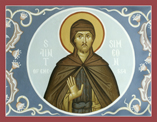 These two young men left their homes and
kinsfolk in Syria: Simeon his old mother and John his wife, and were made monks in the community
of St. Gerasimos, at the hands of Abbot Nikon. They went off into the desert, where they spent
many years in the strictest asceticism. They mortified their bodies with this ascesis until they
were like two pieces of dry wood. One day, Simeon said to John that, at God’s command, he
must leave the desert and return to the company of men, there to serve God as a fool-for-Christ.
John gave him this advice: ‘Keep your heart from all that you see in the world. Whatever
there may be that touches your hand, let it not take hold of your heart. When food passes your
lips, let not your heart be sweetened by it. If your feet have to move, let there be peace within
you. Whatever you do outwardly, let your mind remain tranquil. Pray for me, that God may not part
us from each other in the world to come.’ Holy Simeon accepted his friend’s advice,
embraced him and then left the desert and went among men, to teach them through folly and turn
them to the Christian Faith. He made himself appear mad to men, but his heart was a temple of the
Holy Spirit, a temple of unceasing prayer. He had abundant gifts from God, having discernment
into all men’s secrets, both close at hand and afar off, and healed men of evil spirits and
other infirmities. Dancing through the streets like a madman, he drew near to people and
whispered their sins in their ears, calling them to repentance. He appeared to sinners in dreams,
reprimanding them for their sins and calling them also to repentance. Thus St. Simeon appeared in
a dream to a pagan actor, Bali, who publicly mocked the holy things of the Christians. He rebuked
him and threatened him, and Bali repented and became a good Christian. A dissolute youth went out
of his mind with lust. Seeing him, St. Simeon, feigning madness, struck him a blow on the face,
and said: ‘Do not commit adultery!’ At that moment, the unclean spirit left the young
man and he was healed.
These two young men left their homes and
kinsfolk in Syria: Simeon his old mother and John his wife, and were made monks in the community
of St. Gerasimos, at the hands of Abbot Nikon. They went off into the desert, where they spent
many years in the strictest asceticism. They mortified their bodies with this ascesis until they
were like two pieces of dry wood. One day, Simeon said to John that, at God’s command, he
must leave the desert and return to the company of men, there to serve God as a fool-for-Christ.
John gave him this advice: ‘Keep your heart from all that you see in the world. Whatever
there may be that touches your hand, let it not take hold of your heart. When food passes your
lips, let not your heart be sweetened by it. If your feet have to move, let there be peace within
you. Whatever you do outwardly, let your mind remain tranquil. Pray for me, that God may not part
us from each other in the world to come.’ Holy Simeon accepted his friend’s advice,
embraced him and then left the desert and went among men, to teach them through folly and turn
them to the Christian Faith. He made himself appear mad to men, but his heart was a temple of the
Holy Spirit, a temple of unceasing prayer. He had abundant gifts from God, having discernment
into all men’s secrets, both close at hand and afar off, and healed men of evil spirits and
other infirmities. Dancing through the streets like a madman, he drew near to people and
whispered their sins in their ears, calling them to repentance. He appeared to sinners in dreams,
reprimanding them for their sins and calling them also to repentance. Thus St. Simeon appeared in
a dream to a pagan actor, Bali, who publicly mocked the holy things of the Christians. He rebuked
him and threatened him, and Bali repented and became a good Christian. A dissolute youth went out
of his mind with lust. Seeing him, St. Simeon, feigning madness, struck him a blow on the face,
and said: ‘Do not commit adultery!’ At that moment, the unclean spirit left the young
man and he was healed.
3. St. Victor.
He suffered in Marseilles in the third century. After harsh torture, he was thrown into prison, where he converted the guards to the Christian Faith. He died by crucifixion.
FOR CONSIDERATION, From “My Life in Christ”—St. John of Kronstadt.
When you are struck by other people’s suffering, and the contraction of their souls, so that you are induced to pray for them with a pitying and contrite heart, pray to God to have mercy upon them and to forgive them their sins, as you would pray for the forgiveness of your own sins—that is, implore God with tears to pardon them; likewise pray for the salvation of others as you would pray for your own salvation. If you attain to this and make it a habit, you will receive from God an abundance of spiritual gifts, the gifts of the Holy Spirit, Who loves the soul that cares for the salvation of others, because He Himself, the most Holy Spirit, wishes to save us all in every possible way, if only we do not oppose Him, and do not harden our hearts. “The Spirit Himself intercedeth for us with unutterable groanings (Rom. 8:26).”
Daily Scripture Readings taken from The Orthodox New Testament, translated and published by Holy Apostles Convent, Buena Vista, Colorado, copyright © 2000, used with permission, all rights reserved.
Daily Prologue Readings taken from The Prologue of Ochrid, by Bishop Nikolai Velimirovic, translated by Mother Maria, published by Lazarica Press, Birmingham, England, copyright © 1985, all rights reserved. Edited by Dormition Skete.