

Daily Devotional
Thursday, December 17, 2026 (NS), December 4, 2026 (OS)
Fast Day, but Fish, Wine and Olive Oil Allowed.
Thursday of the Twenty-Ninth Week
The commemoration of the Great-martyr Barbara, and our holy and venerable father among the saints, John of Damascus.
Scripture Readings
Paschalion — Movable Calendar
Thursday of the Twenty-Ninth Week
Epistle
The Reading is from the Epistle of Saint Paul to the Hebrews [§ 315]. Brethren:
7 1Melchisedek, king of Salem, priest of God the Most High—who met Abraham returning from the slaughter of the kings and blessed him, 2to whom also Abraham divided a tenth of all—which indeed is first interpreted “king of righteousness,” and then also “king of Salem,” which is, “king of peace,” 3without father, without mother, without genealogy, having neither beginning of days nor end of life, but having been made like the Son of God, remaineth a priest in perpetuity. 4Now be considering how great this one was, to whom even the Patriarch Abraham gave a tenth of the spoils. 5And indeed those of the sons of Levi, who receive the priesthood, have a commandment to take tithe of the people according to the law, that is, from their brethren, though they came forth out of the loins of Abraham; 6but he who hath no genealogy traced from them hath taken tithe of Abraham and hath blessed him who hath the promises.
Gospel
The Reading is from the Holy Gospel according to Saint Luke [§ 100]. The Lord said this parable:
20 9“A certain man planted a vineyard, and let it out to vinedressers, and went abroad for considerable periods of time. 10“And at the season he sent forth a slave to the vinedressers, in order that they might give him from the fruit of the vineyard; but the vinedressers beat him and sent him away empty. 11“And he continued to send them another slave. But they beat that one also, and dishonored him, and sent him away empty. 12“And he continued to send a third. But they wounded this one also and cast him out. 13“And the lord of the vineyard said, ‘What shall I do? I will send my son, the beloved; perhaps they will respect him after they see him.’ 14“But after the vinedressers saw him, they began reasoning among themselves, saying, ‘This is the heir. Come, let us kill him, that the inheritance might become ours.’ 15“And they cast him forth out of the vineyard and killed him. What therefore shall the lord of the vineyard do to them? 16“He will come and destroy these vinedressers, and will give the vineyard to others.” And after they heard it, they said, “May it not be.” 17And He looked at them and said, “What then is this that hath been written: ‘The stone which the builders rejected, this became the head of the corner [Ps. 117(118):22; cf. Is. 28:16]’? 18“Everyone who falleth upon that stone shall be broken; but on whomsoever it shall fall, it will crush him.”
Menaion — Fixed Calendar
The commemoration of the Great-martyr Barbara, and our holy and venerable father among the saints, John of Damascus.
Epistle
For Gk. usage, see [Gal. 3:23-4:5]. For Sl. usage, see [Gal. 3:23-29].
The Reading is from the Epistle of Saint Paul to the Galatians [§§ 208, 209]. Brethren:
3 23Before faith came, we were being guarded under the law, having been closed up to the faith about to be revealed. 24Therefore the law hath become our tutor until Christ, in order that we might be justified by faith. 25But faith having come, we are no longer under a tutor. 26For all are sons of God through faith in Christ Jesus. 27For as many as were baptized into Christ, ye put on Christ. 28There is neither Jew nor Greek, there is neither slave nor free, there is neither male and female; for ye are all one in Christ Jesus. 29And if ye are Christ’s, then are ye Abraham’s seed, and heirs according to promise.
4 1Now I say, as long as the heir is an infant, he differeth nothing from a slave, though he is lord of all; 2but he is under guardians and stewards until the appointed time of the father. 3So we also, when we were infants, were enslaved under the elements of the world. 4But when the fullness of the time came, God sent forth His Son, born of a woman, born under the law, 5in order that He might redeem those under the law, that we might receive what is our due, the adoption as sons.
Gospel
The Reading is from the Holy Gospel according to Saint Mark [§ 21]. At that time:
5 24A great crowd was following Jesus and pressing upon Him. 25And a certain woman who had a flow of blood for twelve years— 26and who suffered much under many physicians and spent all from her own means, and was not profited at all, but rather came to be the worse for it— 27after she heard about Jesus, came in the crowd behind, and touched His garment; 28for she was saying within herself, “If I might but touch His garments, I shall be made well.” 29And straightway the fountain of her blood was dried up; and she knew in her body that she had been healed from the scourge. 30And Jesus, straightway having fully known in Himself that the power from Him went forth, turned around in the crowd and was saying, “Who touched Me on My garments?” 31And His disciples were saying to Him, “Thou seest the crowd pressing on Thee, and sayest Thou, ‘Who touched Me?’” 32And He kept looking around Himself to see her who had done this. 33And the woman, fearing and trembling, knowing that which had been done for her, came and fell down before Him, and told Him all the truth. 34And He said to her, “Daughter, thy faith hath made thee well; go in peace, and be sound in body from thy scourge.”
Lives of the Saints (Prologue)
December 17th – Civil Calendar
December 4th – Church Calendar
1. The Holy and Great Martyr Barbara.
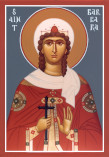 This famous follower of Christ was betrothed to Him
from her early years. Her father, Dioscoros, was a pagan in the city of Heliopolis in Lebanon,
and was famed for his wealth and standing. Dioscoros shut up his only daughter, who was both
intelligent and beautiful, in a high tower, surrounded her with all possible comforts, gave her a
host of attendants, set up idols for worship and built her a bath house with two windows. As she
gazed through the windows of the tower upon the earth below and the starry sky above,
Barbara’s mind was opened by the grace of God, and she came to know Him as the one, true
God and Creator, although she had no human teacher to bring her to the knowledge of Him. Once,
when her father was away from the city, she came out of the tower, and by God’s providence,
met some Christians who told her about the true Christian Faith. Barbara’s heart was set on
fire with love for Christ. She had a third window cut in the bath house as a symbol of the Holy
Trinity, and traced a Cross with her finger on one wall of it, which etched itself deep in the
stone as if cut by a chisel. A spring of water gushed forth from the bath house floor from her
footprint, and it later gave healing from sickness to many. When Dioscoros found out about his
daughter’s faith, he beat her harshly and drove her from the tower, chasing after her to
kill her, but a cliff opened and hid Barbara from her irate father. When she appeared again,
Dioscoros took her to Marcian, the governor of the city, who handed her over for torture. The
innocent Barbara was stripped and beaten until her entire body was covered in bloody wounds, but
the Lord Himself appeared to her in the prison with many angels, and healed her. A certain woman,
Juliana, beheld this and conceived a desire for martyrdom herself. Both of them were fearfully
tortured and taken around the city to be mocked, then their breasts were cut off and much blood
flowed from them. They were finally led out to the place of execution, and Juliana was slain by
soldiers while Barbara was killed by her own father. On the same day, lightning struck
Dioscoros’ house, killing both him and Marcian. St. Barbara suffered in 306, and her
wonder-working relics are preserved in Kiev. Greatly glorified in the kingdom of Christ, she has
appeared many times down to our own days, sometimes alone and sometimes in the company of the
most holy Mother of God. St. Barbara is the protectress from sudden death.
This famous follower of Christ was betrothed to Him
from her early years. Her father, Dioscoros, was a pagan in the city of Heliopolis in Lebanon,
and was famed for his wealth and standing. Dioscoros shut up his only daughter, who was both
intelligent and beautiful, in a high tower, surrounded her with all possible comforts, gave her a
host of attendants, set up idols for worship and built her a bath house with two windows. As she
gazed through the windows of the tower upon the earth below and the starry sky above,
Barbara’s mind was opened by the grace of God, and she came to know Him as the one, true
God and Creator, although she had no human teacher to bring her to the knowledge of Him. Once,
when her father was away from the city, she came out of the tower, and by God’s providence,
met some Christians who told her about the true Christian Faith. Barbara’s heart was set on
fire with love for Christ. She had a third window cut in the bath house as a symbol of the Holy
Trinity, and traced a Cross with her finger on one wall of it, which etched itself deep in the
stone as if cut by a chisel. A spring of water gushed forth from the bath house floor from her
footprint, and it later gave healing from sickness to many. When Dioscoros found out about his
daughter’s faith, he beat her harshly and drove her from the tower, chasing after her to
kill her, but a cliff opened and hid Barbara from her irate father. When she appeared again,
Dioscoros took her to Marcian, the governor of the city, who handed her over for torture. The
innocent Barbara was stripped and beaten until her entire body was covered in bloody wounds, but
the Lord Himself appeared to her in the prison with many angels, and healed her. A certain woman,
Juliana, beheld this and conceived a desire for martyrdom herself. Both of them were fearfully
tortured and taken around the city to be mocked, then their breasts were cut off and much blood
flowed from them. They were finally led out to the place of execution, and Juliana was slain by
soldiers while Barbara was killed by her own father. On the same day, lightning struck
Dioscoros’ house, killing both him and Marcian. St. Barbara suffered in 306, and her
wonder-working relics are preserved in Kiev. Greatly glorified in the kingdom of Christ, she has
appeared many times down to our own days, sometimes alone and sometimes in the company of the
most holy Mother of God. St. Barbara is the protectress from sudden death.
2. St. John of Damascus.
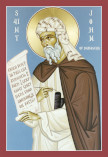 He was first a minister of Caliph Abdul-Malek, and then became a monk
in the monastery of St. Sava the Sanctified. For his ardent advocacy of the veneration of icons
while still a courtier during the reign of the iconoclast Emperor Leo the Isaurian, he was
slandered by the emperor to the caliph, who had his right hand cut off. John fell down in prayer
before the icon of the most holy Mother of God, and his hand was rejoined to his arm and
miraculously healed. When he beheld this wonder, the caliph repented, but John no longer desired
to remain at court as a nobleman, but to withdraw to a monastery. There, he was from the
beginning a model of humility and obedience and of all the works of asceticism prescribed for
monks. He wrote the hymns for the Parting of the Soul from the Body, put together the Octoechos,
the Irmologion, the Menologion and the Pascha Canon, and wrote many theological works of an
inspired profundity. A great monk, hymnographer and theologian, and a great warrior for the truth
of Christ, Damascene is counted among the great fathers of the Church. He entered peacefully into
rest in about 749, being seventy-five years old.
He was first a minister of Caliph Abdul-Malek, and then became a monk
in the monastery of St. Sava the Sanctified. For his ardent advocacy of the veneration of icons
while still a courtier during the reign of the iconoclast Emperor Leo the Isaurian, he was
slandered by the emperor to the caliph, who had his right hand cut off. John fell down in prayer
before the icon of the most holy Mother of God, and his hand was rejoined to his arm and
miraculously healed. When he beheld this wonder, the caliph repented, but John no longer desired
to remain at court as a nobleman, but to withdraw to a monastery. There, he was from the
beginning a model of humility and obedience and of all the works of asceticism prescribed for
monks. He wrote the hymns for the Parting of the Soul from the Body, put together the Octoechos,
the Irmologion, the Menologion and the Pascha Canon, and wrote many theological works of an
inspired profundity. A great monk, hymnographer and theologian, and a great warrior for the truth
of Christ, Damascene is counted among the great fathers of the Church. He entered peacefully into
rest in about 749, being seventy-five years old.
3. St. Gennadius (Gennady), Archbishop of Novgorod.
A writer of note, a champion of truth and one who suffered for the truth of Christ, he brought the various books of Sacred Scripture together in one book and composed a system to find the date of Pascha (the Pachalia) for the next five hundred and thirty-two years. He entered into rest in the Lord in 1505. His wonder-working relics are preserved in the Chudov monastery in Moscow.
FOR CONSIDERATION
Obedience, coupled with humility, is the basis of the spiritual life and the foundation of salvation—and the foundation also of the whole edifice of the Church of God. The great John Damascene, great in every virtue, left as a monk a deep impression on the history of the Church by his extraordinary example of obedience and humility. His elder and spiritual father, wishing to test him, one day handed him some woven baskets and told him to take them into Damascus and sell them there. The elder laid down a very high price for the baskets, thinking that they would not sell at such a price and would have to be brought back. John had, then, firstly to undertake a very long journey; secondly, to enter as a poor monk the city where he had earlier been the man next to the caliph; thirdly, to ask an absurdly high price for the baskets; and fourthly, should the baskets not be sold, he had to endure the long journey there and back for nothing. The elder wished, in this way, to test the obedience, the humility and the patience of his famous disciple. John silently prostrated before the elder, and without a word, took up the baskets and set out. When he came to Damascus, he stood in the market-place and waited for customers. When he told interested passers-by the price of his goods, they began to laugh and mock him as a lunatic. He stood there the whole day, exposed to mockery and ridicule, but God, Who sees all things, did not abandon His patient servant. A passing citizen happened to glance at John, and although John was wearing a monk’s poor habit and his face was shrunken and pale from fasting, the man recognized him as the former nobleman and first minister of the caliph, in whose service he also had been. John also recognized him, but they began to deal as strangers. Even though John told him the ridiculously high price of the baskets, the man bought them and paid the price without comment, mindful of the good deeds that St. John Damascene had once done for him. Then holy John returned singing triumphantly to the monastery, and brought joy to his elder.
Daily Scripture Readings taken from The Orthodox New Testament, translated and published by Holy Apostles Convent, Buena Vista, Colorado, copyright © 2000, used with permission, all rights reserved.
Daily Prologue Readings taken from The Prologue of Ochrid, by Bishop Nikolai Velimirovic, translated by Mother Maria, published by Lazarica Press, Birmingham, England, copyright © 1985, all rights reserved. Edited by Dormition Skete.