

Daily Devotional
Sunday, May 18, 2025 (NS), May 5, 2025 (OS)
No Fasting.
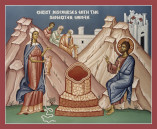
| Fifth Sunday of Pascha, or Sunday of the Samaritan Woman Mode Four — Seventh Eothinon |
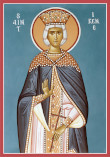
The commemoration of the Great-martyr Irene of Magedon.
Scripture Readings
Paschalion — Movable Calendar
Fifth Sunday of Pascha, or Sunday of the Samaritan Woman
Mode Four — Seventh Eothinon
Epistle
The Reading is from the Acts of the Apostles [§ 28]. In those days:
For Gk usage, see Acts 11:19-30; for Sl. usage. see Acts 11:19-26, 29, 30.
11 19The apostles, who were scattered because of the affliction that arose about Stephen, went abroad as far as Phœnicia and Cyprus and Antioch, speaking the word to no one except to Jews only. 20But some of them were men of Cyprus and Cyrene, who, after they came to Antioch, began speaking to the Hellenists, preaching as good tidings the Lord Jesus. 21And the hand of the Lord was with them, and a great number believed and turned to the Lord. 22Then the report concerning them was heard in the ears of the Church which was in Jerusalem. And they sent forth Barnabas to go through as far as Antioch, 23who, after he came and saw the grace of God, was glad and was exhorting all to keep on remaining near to the Lord with purpose of heart. 24For he was a good man, and full of the Holy Spirit and of faith; and a considerable crowd was added to the Lord. 25And Barnabas went forth to Tarsus to search for Saul. 26And having found him, he brought him to Antioch. And it came to pass that they were gathered together with the Church for a whole year, and taught a considerable crowd. And the disciples were called Christians first in Antioch.
27And in these days prophets came down from Jerusalem to Antioch. 28And one of them, by name Agavos, rose up, and signified by the Spirit that there was about to be a great famine over all the inhabited world, which also came to pass in the time of Claudius Cæsar. 29And according as any one of the disciples was prospered, each of them determined to send relief toward ministering to the brethren who dwelt in Judæa, 30which also they did, sending it off to the presbyters by the hand of Barnabas and Saul.
Gospel
The Reading is from the Holy Gospel according to Saint John [§ 12]. At that time:
4 5Jesus came to a city of Samaria called Sychar, near the place which Jacob gave to his son Joseph. 6And Jacob’s well was there. Jesus then, having grown weary from the journey, was sitting thus on the well. It was about the sixth hour. 7There cometh a woman of Samaria to draw water. Jesus saith to her, “Give Me to drink.” 8For His disciples had gone away into the city in order that they might buy provisions. 9Then the Samaritan woman saith to Him, “How is it that Thou, being a Jew, askest to drink from me, who am a Samaritan woman? For the Jews have no dealings with Samaritans.” 10Jesus answered and said to her, “If thou knewest the gift of God, and Who is the One Who saith to thee, ‘Give Me to drink,’ thou wouldest have asked Him, and He would have given to thee living water.” 11The woman saith to Him, “Lord, Thou hast no bucket for drawing water, and the well is deep. From what place then hast Thou the water, the living one? 12“Thou art not greater than our father Jacob, who gave us the well, and drank from it himself, and his sons, and his animals, art Thou?” 13Jesus answered and said to her, “Everyone who drinketh of this water shall thirst again; 14“but whosoever drinketh of the water which I shall give him in no wise shall ever thirst. But the water which I shall give him shall become in him a fountain of water springing into eternal life.” 15The woman saith to Him, “Lord, give me this water, that I may not be thirsting, nor keep on coming here to draw.” 16Jesus said to her, “Go, call thy husband, and come here.” 17The woman answered and said, “I have no husband.” Jesus said to her, “Well didst thou say, ‘I have no husband,’ 18“for thou hast had five husbands, and now he whom thou hast is not thy husband; this truly thou hast spoken.” 19The woman saith to Him, “Lord, I perceive that Thou art a prophet. 20“Our fathers do reverence in this mountain, and ye say that in Jerusalem is the place where it is needful to do reverence.” 21Jesus saith to her, “Woman, believe Me, that there is coming an hour when neither in this mountain, nor in Jerusalem, shall ye do reverence to the Father. 22“Ye do reverence what ye know not; we do reverence what we know, for salvation is of the Jews. 23“But there is coming an hour, and now is, when the true worshippers shall do reverence to the Father in spirit and truth; for also the Father seeketh such as those who revere Him. 24“God is Spirit, and it is needful for those who revere Him to do reverence in spirit and truth.” 25The woman said to Him, “I know that Messiah is coming, the One Who is called Christ. Whenever that One should come, He will announce to us all things.” 26Jesus saith to her, “I am, the One Who speaketh to thee.” 27And upon this came His disciples, and they wondered that He was speaking with a woman; nevertheless no one said, “What seekest Thou?” or “Why speakest Thou with her?” 28The woman then left her waterpot, and went away into the city, and saith to the people, 29“Come, see a Man Who told me all things whatsoever I did. This One is not the Christ, is He?” 30Then they went forth out of the city and were going toward Him.
31But in the meantime the disciples were entreating Him, saying, “Rabbi, eat.” 32But He said to them, “I have food to eat which ye know not.” 33Therefore the disciples were saying to one another, “No one brought Him anything to eat, did he?” 34Jesus saith to them, “My food is that I be doing the will of Him Who sent Me, and that I should finish His work. 35“Do ye not say, ‘It is yet a space of four months, and the harvest cometh’? Behold, I say to you, lift up your eyes and see the fields, for they are white already to harvest. 36“And the one who reapeth receiveth a reward, and gathereth fruit to life eternal, that both the one who soweth and the one who reapeth may rejoice together. 37“For in this the saying is true, ‘There is one who soweth and another who reapeth.’ 38“I sent you forth to reap on what ye have not labored; others have labored, and ye have entered into their labor.” 39And many of the Samaritans of that city believed in Him, because of the utterance of the woman testifying, “He told me all things whatsoever I did.” 40Therefore, when the Samaritans came to Him, they were asking Him to stay with them; and He stayed there two days. 41And many more believed because of His word. 42And to the woman they were saying, “We no longer believe because of thy talk; for we ourselves have heard, and we know that this One is truly the Savior of the world, the Christ.”
Menaion — Fixed Calendar
The commemoration of the Great-martyr Irene of Magedon.
No readings given.
Lives of the Saints (Prologue)
May 18th – Civil Calendar
May 5th – Church Calendar
1. The Holy and Great Martyr Irene.
 She lived in the Balkans in apostolic times, in the town
of Magedon where her father Licinius was governor of a small region. She was born a pagan of
pagan parents. Penelope—for that was her pagan name—learned the Christian Faith from her teacher,
Appelianus. St. Timothy, the disciple of the Apostle Paul, baptized her and her lady-in-waiting,
and brought her a letter from the Apostle Paul to read. She infuriated her father by her
embracing Christianity, and he intended to have her trampled to death by horses. The horses
turned on him, however, slaying him. She prayed to God on behalf of her father, who had just
tried to kill her, and the Lord resurrected him. He subsequently embraced Christianity. Irene was
tortured in different ways by four kings, other than her father, but God saved her through His
angels. King Sedekias had her cast headlong into a deep pit full of snakes and reptiles. The
saint persevered there for fourteen days, and emerged unscathed. Then the same king attempted to
saw off her feet, but the sword broke against her body as against stone. This same king once
again bound her to the wheel of a water-mill, then let the water in to drown her, but the water
would not flow, but stood still, and the maiden remained whole and alive. After Sedekias was
ousted from his domain, Sapor, his son, marched against those who deposed his father. St. Irene
met Sapor and his army in the city of Magedon. By her prayers, his entire army was stricken
blind. Again, she prayed and their eyesight was restored by divine grace. Nonetheless, the
ungrateful ones shod her with nails, loaded a sack of sand onto her, put a bridle on her and
commanded that she be led like an animal far outside the city. ‘Truly I am as a beast
before Thee, O Lord!’ said the holy martyr as she ran bridled behind her torturers. But an
angel of God caused an earthquake, and the earth opened and swallowed up ten thousand
infidels—but brought thirty thousand to the Faith. Despite this, the king persisted in his
paganism, for which he was smote by an angel of the Lord. Surviving all these tortures, by which
an enormous number of pagans were brought to Christianity, Irene went to the city of Kallinikos,
where she preached the Christian Faith. The local king, Numerian, tried to kill her, throwing her
into three burning metal oxen one after the other. But the maiden was preserved and remained
alive, and many saw and believed. The eparch, Vavdonos, sought to kill her by putting her onto a
burning grid, but this did not harm St. Irene, and brought him to the true Faith. She then went
to the city of Constantina, where Shapur II the Great, King of the Persians, had her head cut
off. But she was resurrected by an angel of God. The king, seeing this, together with many of the
people, believed in Christ and was baptized. And thus St. Irene, by her sufferings and miracles,
brought over 100,000 pagans to faith in Christ. At last she laid herself in a grave and commanded
Appelianus, her former teacher, to close it. After four days, when the grave was opened, her body
was not in it. Thus God glorified forever the maiden and martyr Irene, who had sacrificed all and
endured all, that God should be the more greatly glorified among men.
She lived in the Balkans in apostolic times, in the town
of Magedon where her father Licinius was governor of a small region. She was born a pagan of
pagan parents. Penelope—for that was her pagan name—learned the Christian Faith from her teacher,
Appelianus. St. Timothy, the disciple of the Apostle Paul, baptized her and her lady-in-waiting,
and brought her a letter from the Apostle Paul to read. She infuriated her father by her
embracing Christianity, and he intended to have her trampled to death by horses. The horses
turned on him, however, slaying him. She prayed to God on behalf of her father, who had just
tried to kill her, and the Lord resurrected him. He subsequently embraced Christianity. Irene was
tortured in different ways by four kings, other than her father, but God saved her through His
angels. King Sedekias had her cast headlong into a deep pit full of snakes and reptiles. The
saint persevered there for fourteen days, and emerged unscathed. Then the same king attempted to
saw off her feet, but the sword broke against her body as against stone. This same king once
again bound her to the wheel of a water-mill, then let the water in to drown her, but the water
would not flow, but stood still, and the maiden remained whole and alive. After Sedekias was
ousted from his domain, Sapor, his son, marched against those who deposed his father. St. Irene
met Sapor and his army in the city of Magedon. By her prayers, his entire army was stricken
blind. Again, she prayed and their eyesight was restored by divine grace. Nonetheless, the
ungrateful ones shod her with nails, loaded a sack of sand onto her, put a bridle on her and
commanded that she be led like an animal far outside the city. ‘Truly I am as a beast
before Thee, O Lord!’ said the holy martyr as she ran bridled behind her torturers. But an
angel of God caused an earthquake, and the earth opened and swallowed up ten thousand
infidels—but brought thirty thousand to the Faith. Despite this, the king persisted in his
paganism, for which he was smote by an angel of the Lord. Surviving all these tortures, by which
an enormous number of pagans were brought to Christianity, Irene went to the city of Kallinikos,
where she preached the Christian Faith. The local king, Numerian, tried to kill her, throwing her
into three burning metal oxen one after the other. But the maiden was preserved and remained
alive, and many saw and believed. The eparch, Vavdonos, sought to kill her by putting her onto a
burning grid, but this did not harm St. Irene, and brought him to the true Faith. She then went
to the city of Constantina, where Shapur II the Great, King of the Persians, had her head cut
off. But she was resurrected by an angel of God. The king, seeing this, together with many of the
people, believed in Christ and was baptized. And thus St. Irene, by her sufferings and miracles,
brought over 100,000 pagans to faith in Christ. At last she laid herself in a grave and commanded
Appelianus, her former teacher, to close it. After four days, when the grave was opened, her body
was not in it. Thus God glorified forever the maiden and martyr Irene, who had sacrificed all and
endured all, that God should be the more greatly glorified among men.
2. Ss. Martin and Heraclius.
Slavs, they were persecuted by heretical Arians in Illyria. Sent into exile, these knights of Orthodoxy finished their earthly course in the 4th century and went to the Lord.
FOR CONSIDERATION
Prayer with words is of no use if the heart does not participate. God only hears prayer from the heart. Abba Zoilos of the Thebaid, returning once from Mount Sinai, met a monk who complained that in the monastery, they were greatly suffering from drought. Zoilos asked: ‘Why don’t you pray to God, and implore Him?’ The monk replied: ‘We have prayed and implored, but there is no rain!’ To this Zoilos answered: ‘It is obvious that you are not praying from the heart. Do you want to be convinced that this is so?’ And, thus speaking, the elder raised his hands to heaven and began to pray, and abundant rain fell onto the earth. Seeing this, the marveling monk fell to the ground before the elder and did him reverence, but the elder, fearing the praise of men, quickly fled from him. ‘Ask, and it shall be given you,’ said the Lord Himself. But vain are mouthfuls of prayers if the heart is empty. God does not stand and listen to the lips, but to the heart. Let the heart be filled with prayer and the lips be silent. God will hear and receive the prayer, for He only hearkens to heartfelt prayer.
Daily Scripture Readings taken from The Orthodox New Testament, translated and published by Holy Apostles Convent, Buena Vista, Colorado, copyright © 2000, used with permission, all rights reserved.
Daily Prologue Readings taken from The Prologue of Ochrid, by Bishop Nikolai Velimirovic, translated by Mother Maria, published by Lazarica Press, Birmingham, England, copyright © 1985, all rights reserved. Edited by Dormition Skete.