

Daily Devotional
Friday, July 17, 2026 (NS), July 4, 2026 (OS)
Fast Day, but Wine and Olive Oil Allowed.
Friday of the Seventh Week
The commemoration of our holy father among the saints, Andrew of Jerusalem, Archbishop of Crete, our venerable Mother Martha, the mother St. Symeon Stylites the Younger, and the holy right-believing Tsar Nicholas II, Tsaritsa Alexandra, Tsarevich Alexis, and Tsarevnas Olga, Tatiana, Maria, and Anastasia, together with the Nun-martyrs Elizabeth and Barbara, the martyrs of the imperial house, and the imperial servants slain with them.
Scripture Readings
Paschalion — Movable Calendar
Friday of the Seventh Week
Epistle
The Reading is from the First Epistle of Saint Paul to the Corinthians [§ 139]. Brethren:
7 35This I say for your own profit, not that I might cast a noose upon you, but for that which is seemly, and for constant waiting on the Lord without distraction. 36But if anyone think that he behaveth himself unseemly toward his virgin daughter, if she is past her prime, and so it ought to take place, let him do what he doth wish, he sinneth not; let them marry. 37But he who standeth steadfast in the heart, not having necessity, but hath authority concerning his own will, and hath judged this in his heart to keep his own virgin daughter, doeth well. 38So that also he who giveth her in marriage doeth well; but he who giveth her not in marriage doeth better. 39A wife hath been bound by law for as long a time as her husband liveth; but if her husband should repose, she is free to be married to whom she doth wish, only in the Lord. 40But she is happier if she should so remain, according to mine own opinion; and I think I also have the Spirit of God.
8 1Now concerning the sacrifices to idols, we know that we all have knowledge. Knowledge puffeth up, but love buildeth up. 2And if anyone think he hath come to know anything, he hath known nothing yet as he ought to know. 3But if anyone love God, the same is known by Him. 4Concerning then the eating of things sacrificed to idols, we know that an idol is nothing in the world, and that there is no other God except one. 5For even if indeed there are those called gods, whether in heaven or on the earth—just as there are many gods and many lords— 6but to us there is one God the Father, of Whom are all things, and we to Him, and one Lord Jesus Christ, through Whom are all things, and we through Him. 7But knowledge is not in all; but some, with consciousness of the idol, until now eat it as a sacrifice to an idol, and their conscience, being weak, is defiled.
Gospel
The Reading is from the Holy Gospel according to Saint Matthew [§ 63]. At that time:
15 29Jesus came near to the Sea of Galilee; and He went up into the mountain and was sitting there. 30And many crowds came to Him, having with them the lame, blind, mute, crippled, and many others; and they cast them at the feet of Jesus, and He healed them; 31insomuch that the crowds wondered when they saw the deaf hearing, the mute talking, the crippled healthy, the lame walking, and the blind seeing; and they glorified the God of Israel.
Menaion — Fixed Calendar
The commemoration of our holy father among the saints, Andrew of Jerusalem, Archbishop of Crete, our venerable Mother Martha, the mother St. Symeon Stylites the Younger, and the holy right-believing Tsar Nicholas II, Tsaritsa Alexandra, Tsarevich Alexis, and Tsarevnas Olga, Tatiana, Maria, and Anastasia, together with the Nun-martyrs Elizabeth and Barbara, the martyrs of the imperial house, and the imperial servants slain with them.
Epistle
For the Hierarch:
The Reading is from the Epistle of Saint Paul to the Galatians [§ 213]. Brethren:
5 22The fruit of the Spirit is love, joy, peace, long-suffering, kindness, goodness, faith, 23meekness, self-control; against such things there is no law. 24But they who are of the Christ crucified the flesh with the passions and the lusts. 25If we live by the Spirit, let us also be walking by the Spirit. 26Let us not become vainglorious, provoking one another, envying one another.
6 1Brethren, even if a man should be overtaken in some transgression, ye, the spiritual ones, be restoring such a one in the spirit of meekness, looking out for thyself, lest thou also be tempted. 2Keep on bearing one another’s burdens, and thus fill up the law of the Christ.
for Sl. usage, see [Heb. 8:3-6].
For the New-martyrs of Russia:
The Reading is from the Epistle of Saint Paul to the Romans [§ 99]. Brethren:
8 28We know that to those who love God all things work together for good, to those who are called according to purpose. 29For whom He foreknew, He also foreordained to be conformable to the image of His Son, in order for Him to be the firstborn among many brethren. 30But whom He foreordained, these also He called; and whom He called, these also He justified; and whom He justified, these also He glorified. 31What then shall we say to these things? If God is for us, who can be against us? 32He Who indeed spared not His own Son, but delivered Him up for us all, how shall He not with Him also graciously give us all things? 33Who shall bring an accusation against the elect of God? God is the One Who justifieth. 34Who is the one who condemneth? Christ is the One Who died, but much more is He the One also Who was raised, Who also is at the right of God, Who also intercedeth for us. 35Who shall separate us from the love of Christ? Shall affliction, or distress, or persecution, or famine, or nakedness, or danger, or sword? 36Even as it hath been written: “For on account of Thee, we are being put to death the whole day; we were counted as sheep of slaughter [Ps. 43(44):23(22)].” 37But in all these things we more than conquer through the One Who loved us. 38For I have been persuaded that neither death, nor life, nor angels, nor principalities, nor powers, nor things present, nor things coming, 39nor height, nor depth, nor any other created thing, shall be able to separate us from the love of God, which is in Christ Jesus our Lord.
Gospel
For the Hierarch:
The Reading is from the Holy Gospel according to Saint Matthew [§ 21]. The Lord said:
7 12“All things whatsoever ye wish that men be doing to you, so also be ye doing to them; for this is the law and the prophets.
13“Enter through the narrow gate; for wide is the gate and broad is the way that leadeth away to destruction, and many are they who enter through it. 14“For narrow is the gate and straitened is the way that leadeth away to life, and few are they who find it. 15“But be on guard against the false prophets, who come to you in sheep’s clothing, but within they are rapacious wolves. 16“From their fruits ye shall fully know them. They do not gather a bunch of grapes from thorns, or figs from thistles, do they? 17“Thus, every good tree produceth good fruits, but the rotten tree produceth bad fruits. 18“A good tree is not able to produce bad fruits, nor is a rotten tree able to produce good fruits. 19“Every tree which produceth not good fruit is cut off and cast into the fire. 20“Then surely by their fruits ye shall fully know them.
21“Not everyone who saith to Me, ‘Lord, Lord,’ shall enter into the kingdom of the heavens, but the one who doeth the will of My Father in the heavens.”
For the New-martyrs of Russia:
The Reading is from the Holy Gospel according to Saint John [§ 52]. The Lord said to His disciples:
15 17“These things I command you, that ye be loving one another.
18“If the world hate you, ye know that it hath hated Me before it hath hated you. 19“If ye were of the world, the world would love its own; but because ye are not of the world—but I chose you for Myself out of the world—therefore the world hateth you. 20“Keep on remembering the word which I said to you, ‘A slave is not greater than his lord.’ If they persecuted Me, they will also persecute you; if they kept My word, they will keep yours also. 21“But all these things they will do to you for My name’s sake, because they know not the One Who sent Me. 22“If I had not come and spoken to them, they would not have sin, but now they have no pretext for their sin. 23“The one who hateth Me hateth My Father also. 24“If I did not do the works among them which no other one hath done, they would not have sin; but now they have both seen and hated both Me and My Father. 25“But this cometh to pass that the word might be fulfilled which hath been written in their law: ‘They hated Me without a cause [cf. Ps. 34(35):22, 68(69):5(4)].’ 26“But whenever the Paraclete should come, Whom I shall send to you from the Father, the Spirit of the truth Who proceedeth from the Father, that One shall bear witness concerning Me. 27“And ye also are bearing witness, because ye have been with Me from the beginning.
16 1“These things I have spoken to you, in order that ye should not be made to stumble. 2“They shall put you out of the synagogues; yea moreover, there cometh an hour that everyone who killeth you should think that he offereth God a service.”
Lives of the Saints (Prologue)
July 17th – Civil Calendar
July 4th – Church Calendar
1. St. Andrew, Archbishop of Crete.
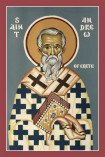 Born in Damascus of Christian parents, he was dumb until
the age of seven. When his parents took him to church for Communion, the power of speech was
given to him. Such is the divine power of Communion. He went to Jerusalem at the age of fourteen
and was tonsured in the monastery of St. Sava the Sanctified. He surpassed many of the older
monks in his understanding and ascesis, and was an example to all. The patriarch took him as his
secretary. When the Monothelite heresy, which taught that the Lord had no human will but only a
divine one, began to rage, the Sixth Ecumenical Council met in Constantinople in 681, in the
reign of Constantine IV. Theodore, Patriarch of Jerusalem, was not able to be present at the
council, and sent Andrew, then a deacon, as his representative. At the council, Andrew showed his
great gifts: his articulateness, his zeal for the Faith and his rare prudence. Being instrumental
in confirming the Orthodox Faith, Andrew returned to his work in Jerusalem. He was later chosen
and enthroned as archbishop of the island of Crete. As archbishop, he was greatly beloved by the
people. He was filled with zeal for Orthodoxy and strongly withstood all heresy. He worked
miracles through his prayers, driving the Saracens from the island of Crete by means of them. He
wrote many learned books, poems and canons, of which the best-known is the Great Canon of
Repentance which is read in full on the Thursday of the Fifth Week of the Great Fast. Such was
his outward appearance that, ‘looking at his face and listening to the words that flowed
like honey from his lips, each man was touched and renewed’. Returning from Constantinople
on one occasion, he foretold his death before reaching Crete. And so it happened. As the ship
approached the island of Mytilene, this light of the Church finished his earthly course and his
soul went to the kingdom of Christ, in about the year 740.
Born in Damascus of Christian parents, he was dumb until
the age of seven. When his parents took him to church for Communion, the power of speech was
given to him. Such is the divine power of Communion. He went to Jerusalem at the age of fourteen
and was tonsured in the monastery of St. Sava the Sanctified. He surpassed many of the older
monks in his understanding and ascesis, and was an example to all. The patriarch took him as his
secretary. When the Monothelite heresy, which taught that the Lord had no human will but only a
divine one, began to rage, the Sixth Ecumenical Council met in Constantinople in 681, in the
reign of Constantine IV. Theodore, Patriarch of Jerusalem, was not able to be present at the
council, and sent Andrew, then a deacon, as his representative. At the council, Andrew showed his
great gifts: his articulateness, his zeal for the Faith and his rare prudence. Being instrumental
in confirming the Orthodox Faith, Andrew returned to his work in Jerusalem. He was later chosen
and enthroned as archbishop of the island of Crete. As archbishop, he was greatly beloved by the
people. He was filled with zeal for Orthodoxy and strongly withstood all heresy. He worked
miracles through his prayers, driving the Saracens from the island of Crete by means of them. He
wrote many learned books, poems and canons, of which the best-known is the Great Canon of
Repentance which is read in full on the Thursday of the Fifth Week of the Great Fast. Such was
his outward appearance that, ‘looking at his face and listening to the words that flowed
like honey from his lips, each man was touched and renewed’. Returning from Constantinople
on one occasion, he foretold his death before reaching Crete. And so it happened. As the ship
approached the island of Mytilene, this light of the Church finished his earthly course and his
soul went to the kingdom of Christ, in about the year 740.
2. St. Martha.
She was the mother of St. Simeon of the Wondrous Mountain (see May 24th). Utterly consecrated in her soul, she had no thought of marriage. When her parents betrothed her to a young man, she planned to leave their home and retire from the world, but St. John the Baptist appeared to her and counselled her to fulfill the desire of her parents and marry, which she did. From this marriage was born the great St. Simeon, the ascetic of the Wondrous Mountain. She followed the practice of rising at midnight for prayer; she gave help to the needy with great compassion, visiting the poor and serving the sick. A year before her death, she saw a host of angels with candles in their hands, and learned from them the hour of her death. Learning this, Martha gave herself yet more fervently to prayer and good works. She entered peacefully into rest in 551, and was buried near the pillar of her son Simeon. She appeared a number of times after her death, to teach people and to heal the sick, and appeared in the following way to the superior of Simeon’s community: after her funeral, the abbot kept the lamp burning on her grave, intending never to let it go out. But, after a certain time, the monks became lazy and the lamp went out. Then the superior was taken ill, and the saint appeared to him and said: ‘Why are you not lighting the lamp on my grave? Know that the light of your candles is not needful to me, because God has made me worthy of His eternal, heavenly light, but it is needful for you. When you burn a light on my grave, you urge me to pray to the Lord for you.’ From this it is clear that the goal of our veneration of the saints is to remind them, who are worthier than we, to pray to God for us and for our salvation.
3. The Holy Tsar-martyr Nicholas II and the Royal New-martyrs of Russia.
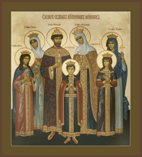 The son of Tsar
Alexander III (1881-1894), Nicholas was anointed as the Orthodox king of Russia in 1896. He was
married to Princess Alix of Hesse (Germany), who became the Tsaritsa Alexandra. Tsar Nicholas II
was a kind and compassionate soul, who took his role seriously as the father of an Orthodox
empire, always seeking to strengthen the faith of his people. He built innumerable new churches,
hospitals, and other places to assist the poor. Seeking to restore the traditional culture of his
country, which had been abandoned by the Westernizing intelligentsia, he offered money and
support to monasteries and churches (whose number reached 57,000). The tsar commissioned the
painting of large numbers of icons in the Byzantine and Old Russian styles, and he encouraged the
building of temples in the ancient architectural styles. The Empress Alexandra, likewise, was a
devout Christian and liked to read the Church fathers and discuss theological topics. She
sometimes went incognito to the Kazan Cathedral to pray in the midst of the common people.
The son of Tsar
Alexander III (1881-1894), Nicholas was anointed as the Orthodox king of Russia in 1896. He was
married to Princess Alix of Hesse (Germany), who became the Tsaritsa Alexandra. Tsar Nicholas II
was a kind and compassionate soul, who took his role seriously as the father of an Orthodox
empire, always seeking to strengthen the faith of his people. He built innumerable new churches,
hospitals, and other places to assist the poor. Seeking to restore the traditional culture of his
country, which had been abandoned by the Westernizing intelligentsia, he offered money and
support to monasteries and churches (whose number reached 57,000). The tsar commissioned the
painting of large numbers of icons in the Byzantine and Old Russian styles, and he encouraged the
building of temples in the ancient architectural styles. The Empress Alexandra, likewise, was a
devout Christian and liked to read the Church fathers and discuss theological topics. She
sometimes went incognito to the Kazan Cathedral to pray in the midst of the common people.
The tsar was a promoter of peace and tried to facilitate agreements for disarmament among the European nations. He was exceedingly merciful, and Nicholas pardoned criminals, even revolutionaries, and gave away vast quantities of his own land and money to the peasants. He subsidized the relocation of farmers to Siberia, and by 1913, the peasants owned 100% of the arable land in Siberia and Asian Russia, and 90% in European Russia. Government workers per 100,000 people was 163. Wages were high, labor laws were progressive, and taxes and the cost of living were low, making Russia one of the most egalitarian and prosperous countries in the world. During twenty years of Tsar Nicholas’ reign, the population increased by 63 million. Industry grew rapidly, and the Russian Empire was on the verge of becoming the world’s greatest superpower. There was no reason for any revolution.
The royal couple had five children: Olga, Tatiana, Maria, Anastasia, and their youngest and only son was Alexei, who had the disease of hemophilia and was weak and sickly. The boy often suffered from painful attacks and hemorrhages, which tortured his compassionate mother to watch, but Alexei patiently endured his affliction and became more philosophical thereby.
Through Jewish agitation, a revolution was first instigated in 1905; although it failed, revolutionaries and hooligans continued to perpetrate violence in the years that followed. Tsar Nicholas remained an extremely popular king and was impeccable in his conduct, but the media tried to slander him and sully his reputation, a practice that continues among Western historians to this day. At that time, St. John of Kronstadt prophesied that if the Russian people did not repent of their sins, God would take away the pious tsar and the whole land would be filled with blood and tears. When World War I erupted, Tsaritsa Alexandra and her four daughters served as nurses for the wounded, and the tsar himself constantly went to the front together with Alexei to encourage the troops. In 1917, the atheist, Jewish-controlled Bolsheviks, led by Lenin and financed by American bankers, initiated the Russian Revolution and dethroned the tsar, who was betrayed by most of those in his inner circle. The communists imprisoned the royal family under heavy guard at Tsarskoye Selo. The saints endured all with undaunted patience and attended church services daily, praying fervently for the sake of their suffering nation. Tsar Nicholas and his family and their suite were later moved to Yekaterinburg and confined to the house of a sleazy Jewish gold merchant named Gelfin (mistakenly known as the “Ipatiev” House). The Red soldiers tormented and mocked the royal sufferers with the utmost inhumanity. At last, on July 4, 1918, the royal family and their attendants were brought to the basement of the house and cruelly murdered by ten Jewish Bolsheviks. Masonic and occult symbols were drawn on the walls with the tsar-martyr’s blood after the ritual murders. It was a Jewish ritual sacrifice to Lucifer in exchange for power. The symbols, translated, read: “Here, on orders from unseen forces, the king was sacrificed to destroy his kingdom. All peoples are notified of this.” Those killed were: Tsar Nicholas II, Tsaritsa Alexandra, Grand Duchesses Olga, Tatiana, Maria, and Anastasia, and the Crown-prince Alexei; Eugene Botkin, the tsar’s physician; Anna Demidova the tsaritsa’s chambermaid, the cook Ivan Mikhailovich Kharitonov, the servant A. E. Trupp, the sailor Clement Nagorny, who had looked after the tsarevich since early childhood, and Ivan Sednev, the servant of the grand duchesses. They were killed because they were Orthodox Christians and leaders of the sacred monarchy, “that which restraineth” (2 Thess. 2:6) the forces of evil and the coming of Antichrist. The death of the last Orthodox king signals the beginning of the apocalyptic era. The royal martyrs all received crowns of martyrdom and eternal glory in the kingdom of Christ. They have performed many miracles for those who call upon them in faith.
FOR CONSIDERATION
If the whole of your life has passed smoothly and without cares, weep for yourself. For both the Gospel and human experience assert with one voice that no one has, without great sufferings and trials, left behind him any great work on earth or been glorified in heaven. If your earthly road has been bathed in sweat and tears for the attaining of righteousness and truth, rejoice and be glad, for your reward will indeed be great in heaven. Never entertain the foolish thought that God has forsaken you. God knows exactly how much you can bear, and measures your sufferings and trials accordingly. ‘When men know,’ says St. Nil Sorsky, ‘how much weight a horse can carry, or a donkey or a camel, and load them according to their strength; when a potter knows how long to leave the clay in the kiln for it to be neither shattered nor undercooked, how could God not know how much temptation a soul can bear to make it ready and fitted for the kingdom of heaven?’
Daily Scripture Readings taken from The Orthodox New Testament, translated and published by Holy Apostles Convent, Buena Vista, Colorado, copyright © 2000, used with permission, all rights reserved.
Daily Prologue Readings taken from The Prologue of Ochrid, by Bishop Nikolai Velimirovic, translated by Mother Maria, published by Lazarica Press, Birmingham, England, copyright © 1985, all rights reserved. Edited by Dormition Skete.