

Daily Devotional
Thursday, July 2, 2026 (NS), June 19, 2026 (OS)
Fast Day, but Fish, Wine and Olive Oil Allowed.
Thursday of the Fifth Week
The commemoration of the holy Apostle Jude, the brother of the Lord, and Paisius the Great, and our holy father among the saints, John Maximovich the Wonder-worker, Archbishop of Shanghai and San Francisco.
Scripture Readings
Paschalion — Movable Calendar
Thursday of the Fifth Week
Epistle
The Reading is from the Epistle of Saint Paul to the Romans [§ 118]. Brethren:
15 17I have my boasting in Christ Jesus as to the things pertaining to God. 18For I will not dare to speak of anything which Christ hath not worked out through me for the obedience of the nations, by word and deed, 19in the power of signs and wonders, in the power of the Spirit of God, so as for me to have set forth fully the Gospel of the Christ from Jerusalem and round about unto Illyricum. 20And so I am thus exerting myself eagerly to announce the Gospel where Christ was not named, lest I should build upon another’s foundation. 21But as it hath been written: “To whom it was not announced concerning Him, they shall see; and those who have not heard shall comprehend [Is. 52:15].”
22Wherefore also I was hindered many times from coming to you. 23But now having no more place in these regions, and having an earnest desire to come to you for many years, 24whensoever I go into Spain, I will come to you. For I hope to see you while passing through, and to be sent forth to that place by you, if first in part I should take my fill of you. 25But now I am going to Jerusalem, ministering to the saints. 26For they of Macedonia and Achaia were well pleased to make a certain contribution for the poor among the saints who are in Jerusalem. 27For they were well pleased; and they are their debtors. For if the nations participated in their spiritual things, they are indebted also in the fleshly things to minister to them. 28This then having finished, and having sealed this fruit to them, I will go forth by way of you into Spain. 29And I know that when I come to you, I will come in the fullness of the blessing of the Gospel of the Christ.
Gospel
The Reading is from the Holy Gospel according to Saint Matthew [§ 49]. At that time:
12 46While Jesus yet talked to the crowds, behold, His Mother and His brethren were standing outside, seeking to speak to Him. 47And one said to Him, “Behold Thy Mother and Thy brethren are standing outside, seeking to speak to Thee.” 48But He answered and said to the one who spoke to him, “Who is My mother? And who are My brethren?” 49And stretching forth His hand toward His disciples, He said, “Behold, My mother and My brethren. 50“For whosoever shall do the will of My Father Who is in the heavens, the same is My brother and sister and mother.”
13 1And in the course of that day, Jesus, having gone out of the house, was sitting by the sea. 2And great crowds were gathered together before Him, so that He stepped into the ship and sat; and the whole crowd was standing on the seashore. 3And He spoke many things to them in parables.
Menaion — Fixed Calendar
The commemoration of the holy Apostle Jude, the brother of the Lord, and Paisius the Great, and our holy father among the saints, John Maximovich the Wonder-worker, Archbishop of Shanghai and San Francisco.
Epistle
For the Apostle:
The Reading is from the General Epistle of Saint Jude [§ 77].
For Gk. usage, see Jude 1-25; for Sl. usage, see Jude 1-10.
1Jude, a slave of Jesus Christ, and brother of Iakovos, to those called in God the Father, who have been sanctified and kept for Jesus Christ: 2Mercy and peace and love be multiplied to you.
3Beloved, when I myself made every effort to write to you concerning the common salvation, I had need to write to you, exhorting you to contend for the faith which was once for all delivered to the saints. 4For certain men slipped in secretly, who of old were proscribed to this judgment, ungodly ones, transposing the grace of our God into licentiousness, and denying the only Master and our Lord Jesus Christ. 5But I wish to remind you, though ye know this once for all, that the Lord, having saved a people out of the land of Egypt, later destroyed those who believed not. 6And those angels who kept not their first place, but deserted their own habitation, He hath kept in everlasting bonds under darkness until the judgment of the great day; 7as Sodom and Gomorrah, and the cities around them in like manner to these, having committed fornication and gone away after other flesh, are set forth for an example, undergoing the punishment of everlasting fire. 8Yet in like manner also these dreamers indeed defile the flesh, and set at nought dominion, and blaspheme dignities. 9Now Michael the archangel, when he took issue with the devil and was disputing about the body of Moses, did not dare to lay upon him a judgment of blasphemy, but said, “May the Lord rebuke thee [cf. Zach. 3:3].” 10But these blaspheme indeed whatever things they do not know; and whatever things they understand naturally, as the irrational animals, in these things they corrupt themselves. 11Woe to them! For they went in the way of Cain, and were poured out in the error of Balaam for a reward, and destroyed themselves in the gainsaying of Kore.
12In your love feasts these are hidden rocks in the sea, when they feast with you, shepherding themselves without fear. They are waterless clouds being carried about by winds; fruitless autumnal trees which twice died and were uprooted; 13wild waves of the sea, foaming out their own shameful things; wandering stars, to whom hath been kept the blackness of darkness forever. 14And to these also, Enoch, the seventh from Adam, prophesied, saying, “Behold, the Lord came amidst myriads of His saints, 15“to do judgment against all, and to convict all the impious among them for all their works of impiety which they did impiously, and for all the hard things which impious sinners spoke against Him.” 16These are murmurers, complainers, walking according to their desires; and their mouth speaketh great swelling words, showing respect to persons for the sake of advantage. 17But ye, beloved, be reminded of the words which were spoken before by the apostles of our Lord Jesus Christ, 18that they were saying to you, that in the last time there shall be mockers walking according to their own desires of impieties. 19These are they who cause divisions by separating themselves, material-minded ones, not having the Spirit. 20But ye, beloved, building up yourselves by your most holy faith, praying in the Holy Spirit, 21keep yourselves in the love of God, awaiting the mercy of our Lord Jesus Christ unto life eternal. 22And to some, on the one hand, be showing mercy, who are in doubt; 23but to some, on the other hand, be saving in fear, snatching them out of the fire, hating even the garment which hath been stained by the flesh.
24Now to Him Who is able to guard you from stumbling, and to make you stand before the presence of His glory blameless in exceeding joy, 25to the only wise God our Savior, be glory and majesty, might and authority, both now and to all the ages. Amen.
For the Hierarch:
The Reading is from the Epistle of Saint Paul to the Hebrews [§ 335]. Brethren:
13 17Be obedient to those who lead you, and keep on submitting, for they are watchful for your souls, as those about to render an account, that they may do this with joy, and not groaning; for this would be unprofitable for you. 18Keep on praying for us; for we trust that we have a good conscience, in all things wishing to conduct ourselves well. 19But I beseech you more abundantly to do this, that I might be restored more quickly to you.
20Now the God of peace Who brought up from the dead our Lord Jesus, the Shepherd of the sheep, the great One, in the blood of an everlasting covenant, 21may He render you perfect in every good work, in order to do His will, doing in you that which is well-pleasing before His face, through Jesus Christ, to Whom be glory to the ages of the ages. Amen.
Gospel
For the Apostle:
The Reading is from the Holy Gospel according to Saint John [§ mid 48]. The Lord said to His disciples:
14 21“The one who hath My commandments and keepeth them, that one is the one who loveth Me. And the one who loveth Me shall be loved by My Father, and I will love him and will manifest Myself to him.” 22Judas, not the Iscariote, saith to Him, “Lord, then what hath come to pass that thou art about to manifest Thyself to us, and not to the world?” 23Jesus answered and said to him, “If anyone love Me, he will keep My word; and My Father will love him, and We will come to him and make an abode with him. 24“The one who loveth Me not keepeth not My words; and the word which ye hear is not Mine, but of the Father Who sent Me.”
For the Hierarch:
The Reading is from the Holy Gospel according to Saint Luke [§ 24]. At that time:
6 17Jesus stood upon a level place. And there was a crowd of
His disciples, and a great multitude of the people from all of Judæa and Jerusalem and the
seacoast of Tyre and Sidon, who came to hear Him, and to be healed of their diseases—
18even those who were troubled by unclean spirits; and they were cured.
19And all the crowd was seeking to touch Him, for power was coming forth from Him and
healing all. 20And He lifted up His eyes to His disciples, and began to say:
“Blessed are the poor, for yours is the kingdom of God.
21“Blessed are ye who hunger now, for ye shall be
filled.
Blessed are ye who weep now, for ye shall laugh.
22“Blessed are ye whenever men hate you, and whenever they
separate you, and reproach you, and cast out your name as evil, on account of the Son of
Man.
23“Rejoice in that day and leap for joy, for behold, your
reward is great in the heavens.”
Lives of the Saints (Prologue)
July 2nd – Civil Calendar
June 19th – Church Calendar
1. The Holy Apostle Jude.
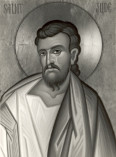 One of the Twelve Apostles, he was the son of Joseph and Salome
(not the Salome from Bethlehem, but another), and brother to Iakovos the Lord’s Brother.
Joseph the Carpenter had four sons by Salome: Iakovos, Hosea, Simon and Jude. Jude is often
called ‘Jude the brother of Iakovos,’ to note his relationship with his brother (Lk.
6:16; Acts 1:13). St. Jude begins his Epistle: ‘Jude, the servant of Jesus Christ, and
brother of Iakovos’. Although he could call himself the Lord’s brother, just as
Iakovos did, he did not do so. This was out of humility and out of shame, because he did not
believe in Christ the Lord at the very beginning. When the aged Joseph desired to give Jesus His
portion of the property before his death, just as he was doing for his other children, all of
them were against it, including Jude, and only Iakovos voluntarily shared out his portion and
laid some aside for Jesus. Jude is also called Levi and Thaddeus. There is another Thaddeus, or
Jude, one of the Seventy (see August 21st), but this Thaddeus or Jude was one of the great
apostles. He preached the Gospel in Judea, Samaria, Galilee, Idumea, Syria, Arabia, Mesopotamia
and Armenia. At Edessa, the city of Abgar, he continued and developed the preaching of the other
Thaddeus. While he was preaching in the region around Ararat, he was seized by the pagans,
crucified and shot through with arrows, that he might reign forever in the kingdom of Christ.
One of the Twelve Apostles, he was the son of Joseph and Salome
(not the Salome from Bethlehem, but another), and brother to Iakovos the Lord’s Brother.
Joseph the Carpenter had four sons by Salome: Iakovos, Hosea, Simon and Jude. Jude is often
called ‘Jude the brother of Iakovos,’ to note his relationship with his brother (Lk.
6:16; Acts 1:13). St. Jude begins his Epistle: ‘Jude, the servant of Jesus Christ, and
brother of Iakovos’. Although he could call himself the Lord’s brother, just as
Iakovos did, he did not do so. This was out of humility and out of shame, because he did not
believe in Christ the Lord at the very beginning. When the aged Joseph desired to give Jesus His
portion of the property before his death, just as he was doing for his other children, all of
them were against it, including Jude, and only Iakovos voluntarily shared out his portion and
laid some aside for Jesus. Jude is also called Levi and Thaddeus. There is another Thaddeus, or
Jude, one of the Seventy (see August 21st), but this Thaddeus or Jude was one of the great
apostles. He preached the Gospel in Judea, Samaria, Galilee, Idumea, Syria, Arabia, Mesopotamia
and Armenia. At Edessa, the city of Abgar, he continued and developed the preaching of the other
Thaddeus. While he was preaching in the region around Ararat, he was seized by the pagans,
crucified and shot through with arrows, that he might reign forever in the kingdom of Christ.
2. Our Holy Father Paisius the Great.
He was an Egyptian by birth and by language. After a vision in a dream, his mother dedicated him to the service of God, and he went to St. Pambo while still a youth. Pambo accepted him as a disciple, and he was a fellow disciple there of St. John Kolovos, who wrote St. Paisius’ life. To the joy of his spiritual father, Paisius piled labor upon labor one ascetic feat upon another. The Prophet Jeremias, whom he especially revered and read frequently, appeared to him often, and also the Lord Christ. ‘Peace be to thee, My beloved in whom I am well-pleased!’ the Lord said to him. By God’s great grace, Paisius had the particular gift of being able to abstain completely from food. He went for forty years without tasting a thing. He waged a tremendous war against evil spirits that sometimes appeared to him in their own form and sometimes as angels of light. But God’s servant, filled with grace, never once let himself be deceived and led astray. He was a clairvoyant and a wonder-worker famed throughout the whole of Egypt. He went to the Lord in the year 400. Isidore of Pelusium took his relics to his own monastery and buried them there.
3. The Holy Martyr Zossima.
A Roman soldier at the time of the Emperor Trajan, he courageously confessed his faith in Christ the Lord and endured many bitter torments. In the midst of his torture, a voice was heard from heaven: ‘Be of good cheer, Zossima, and sign yourself with the Cross. I am with you.’ Angels of God appeared to him in the prison. After manifold sufferings, he was beheaded with an axe in the year 116.
4. Our Holy Father John the Solitary.
He lived the ascetic life near Jerusalem in the sixth century. His asceticism brought him to a high degree of purity and spiritual power, so that the wild beasts were obedient to him. He entered into rest in the Lord in 586, at a great age.
5. Our Holy Father John (Maximovitch) the Wonder-worker of San Francisco.
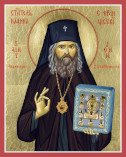 He was born in the
province of Kharkov with the name Michael and graduated from the military academy. He became a
spiritual son of Archbishop Anthony (Khrapovitsky) and loved to read the lives of the saints.
During the Civil War, his family emigrated to Yugoslavia in 1921, where Michael studied at the
theological school and was later tonsured a monk with the name John. He was next ordained a
priest and taught at a Serbian seminary, where he lived a strict ascetic life of fasting, vigil,
and prayer, impressing all who saw him, including the renowned Bishop Nikolai (Velimirovic). He
served Liturgy every day, and on Pascha, he radiated the joy of the Resurrection. Father John was
consecrated Bishop of Shanghai by Metropolitan Anthony in 1934, the Feast of the Entry of the
Theotokos.
He was born in the
province of Kharkov with the name Michael and graduated from the military academy. He became a
spiritual son of Archbishop Anthony (Khrapovitsky) and loved to read the lives of the saints.
During the Civil War, his family emigrated to Yugoslavia in 1921, where Michael studied at the
theological school and was later tonsured a monk with the name John. He was next ordained a
priest and taught at a Serbian seminary, where he lived a strict ascetic life of fasting, vigil,
and prayer, impressing all who saw him, including the renowned Bishop Nikolai (Velimirovic). He
served Liturgy every day, and on Pascha, he radiated the joy of the Resurrection. Father John was
consecrated Bishop of Shanghai by Metropolitan Anthony in 1934, the Feast of the Entry of the
Theotokos.
He always performed the daily services completely and unabridged, so that at Compline, five or more canons would be read, so as to honor all of the saints. St. John often walked the city barefoot, having given his shoes to some poor man. He ate once a day, at 11 o’clock at night. He often unexpectedly visited those in need, according to his clairvoyance, knowing in the Spirit when someone needed his help or Holy Communion. Bishop John rescued many children from the streets of Shanghai and put them in his orphanage dedicated to St. Tikhon of Zadonsk. In 1949, the saint evacuated his flock of five thousand and accompanied them to the Philippines, and from there to America.
In 1951 the Hierarchical Synod of the Russian Church Abroad decided to make Vladyka John Archbishop of Paris and Brussels. Here, too, he gained a reputation for holiness and miracles. St. John also collected information about many ancient Western saints and added them to the Church calendar. In 1963, the venerable one was appointed Archbishop of San Francisco and Western America but was soon plunged into a grievous temptation when some members of the parish council sued him over the construction of the cathedral in San Francisco. The holy man of God always endured persecution and mistreatment with patience and meekness. He reposed in Seattle in 1966, in the presence of the miraculous Kursk Root Icon. His body is completely incorrupt and is located in the cathedral in San Francisco. As during his life, so after St. John’s death, he has worked so many miracles that they could fill several volumes.
FOR CONSIDERATION
The monks once asked Paisius the Great: ‘Speak to us, Father, a word for salvation, and tell us how we must live to please God.’ The elder replied: ‘Go and keep the commandments of God and hold fast to the tradition of the fathers.’ The tradition of the fathers is the experience of the saints in the spiritual sphere, an experience grown immense in nearly two thousand years, the experience of thousand upon thousand of holy men and women—an incredibly rich storehouse of wisdom and an immense heap of proofs of every truth of holy Scripture. And all this good, all this wisdom, all these proofs and all this experience have been cast aside by the Protestants! Oh, what unspeakable stupidity! Oh, what an extreme of poverty!
Daily Scripture Readings taken from The Orthodox New Testament, translated and published by Holy Apostles Convent, Buena Vista, Colorado, copyright © 2000, used with permission, all rights reserved.
Daily Prologue Readings taken from The Prologue of Ochrid, by Bishop Nikolai Velimirovic, translated by Mother Maria, published by Lazarica Press, Birmingham, England, copyright © 1985, all rights reserved. Edited by Dormition Skete.